Book Review: Linghun by Ai Jiang
Genre: Gothic Horror
Age: Adult
Format: Novel
In 2009, Darcy Harris published an article in Omega (Westport) journal, entitled, “Oppressions of the Bereaved: a critical analysis of grief in Western Society”.[1] Harris’s thesis is that ‘Bereaved individuals often experience profound social pressure to conform to societal norms that constrict the experience of grief rather than support it’ in Western culture.
It’s not just academics that have noticed this trend, and this wasn’t a 2000s issue that has since been resolved: this article is echoed in a 2016 HuffPost contributor article by Michelle Steinke-Baumgard, ‘Stifled Grief: How The West Has It Wrong’, who breaks down the societal expectations around grief, and how this contrasts with reality for the bereaved. In 2024, Psychology Today published an article co-authored by Mark Shelvock and Jodi Gorham, entitled, ‘Tensions between Grieving Hearts and Western Minds’, which identifies ‘a lack of grief and death literacy’ in modern life, and describes the difficulties for people who have mystical experiences relating to death when open discussion around these topics is societally taboo.
Linghun by Ai Jiang is, in many ways, a novella that speaks to this very tension. The title means ‘soul’, which is a name given both to a person and to a house, as well as being a central theme of the novella. It is about many kinds of deaths, losses, and grief, and merges the Chinese concept of Di Fu Ling, earthbound spirits who in folklore have a strong attachment to a single location and are often malicious, combined with the (Canadian, specifically) struggle to process and express grief in a healthy way. This is about creating a world where, in one very specific suburb of Toronto, you can call back your lost loved ones and see them again, and the lengths people will go to make the connection with their dead.
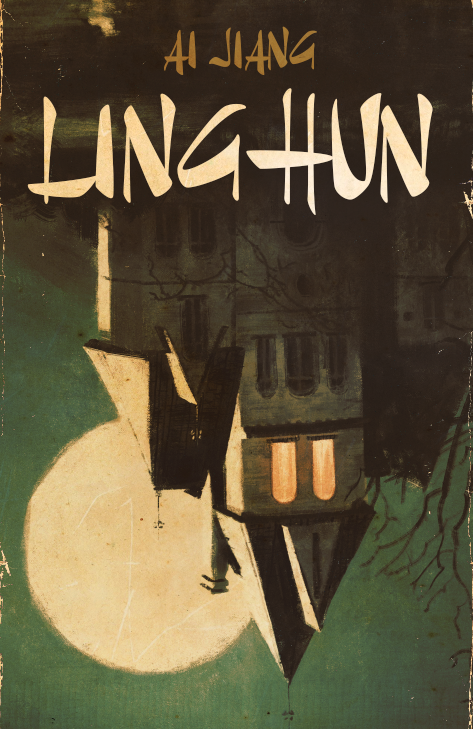
The story is told from multiple points of view. There is Wenqi, the main character, who moves to HOME (Homecoming Of Missing Entities) so that her parents can summon the ghost of Tianqi, her older brother, who died in a traffic accident as a young child some years before. Wenqi does not want to summon her brother’s ghost – she has positive memories of him from her childhood, and is now older than he was when he died. She notices that the house is surrounded by other families who camp outside all the haunted houses in HOME; these are the ‘lingerers’, who are waiting for a chance to get a house of their own.
Liam is a lingerer. His parents are desperate to summon the ghost of his sister, but Liam, like Wenqi, does not know if that’s something he wants. He wants to live his own life, but instead he camps out on the lawn of a house in HOME, waiting for a chance to win one in a bloody Battle Royale style auction, or for one to come on the market. Liam and Wenqi get to know each other, and their lives intertwine with other lingerers and HOME house-owners, including the nameless ‘Mrs.’ who lives across the street from Wenqi.
For me, the story of ‘Mrs’ is the most interesting and lyrically told segment in the book. I would have liked a little more from her earlier, but I was very satisfied with what we got, and the arc her story took. I especially loved the way that her perspective is in second person, as all she has is her sense of self. She has no name for the majority of the book, and nobody can remember her surname. She is simply someone’s wife, and her husband is dead, and refuses (possibly) to haunt her. We go on a journey with this character from her current situation, living in the only un-haunted home in HOME, as she rediscovers herself, and her name.
Meanwhile, for the other characters, the refusal of everyone around them to deal with their grief except by finding a way to erase it, only begets more loss. They are easily manipulated by the estate agents who are making bank on HOME and exploiting their pain with the evils of a misplaced hope. They waste their lives, and the lives of their living children, in waiting for a chance to reclaim the dead, as if this will solve everything.
The novella does not have a simple ‘live, laugh, love’ message, nor is it a celebration of life that negates and minimises grief. It is about the struggles of living with loss, and the ways grief will always be a part of life, and how many kinds of grief exist for different people. Ai Jiang writes in the Author’s Note that emigrating to another country, as ‘Mrs’ did, is its own kind of death – and that her cyberpunk novel explores this idea further. I believe this is the novel I AM AI, and I will definitely be picking that up. I can see those elements in ‘Mrs.’ story clearly, and also a little in Wenqi’s, but this is only a novella, and there is not enough space to explore all the threads that weave through the narrative.
Linghun also strongly reminded me of the ghost-summoning plot and multi-POV ‘chapters’ of the Thai horror film, บ้านเช่า..บูชายัญ/Home for Rent (2023) dir. Sophon Sakdaphisit, which I would also highly recommend. If you’re after a movie chaser to the novella for some visual scares, ghost-summoning, and family drama, that’s the film I would recommend alongside this novella.
All in all, Linghun is more than a modern gothic ghost story, and I will be thinking about for a long time.
[1] Harris D. Oppression of the bereaved: a critical analysis of grief in Western society. Omega (Westport). 2009-2010;60(3):241-53. doi: 10.2190/om.60.3.c. PMID: 20361724.
Purchase
Dark Matter Ink (direct from the publisher)
By C. M. Rosens
Instagram, Threads, TikTok: @cm.rosens
Bluesky: @cmrosens.com